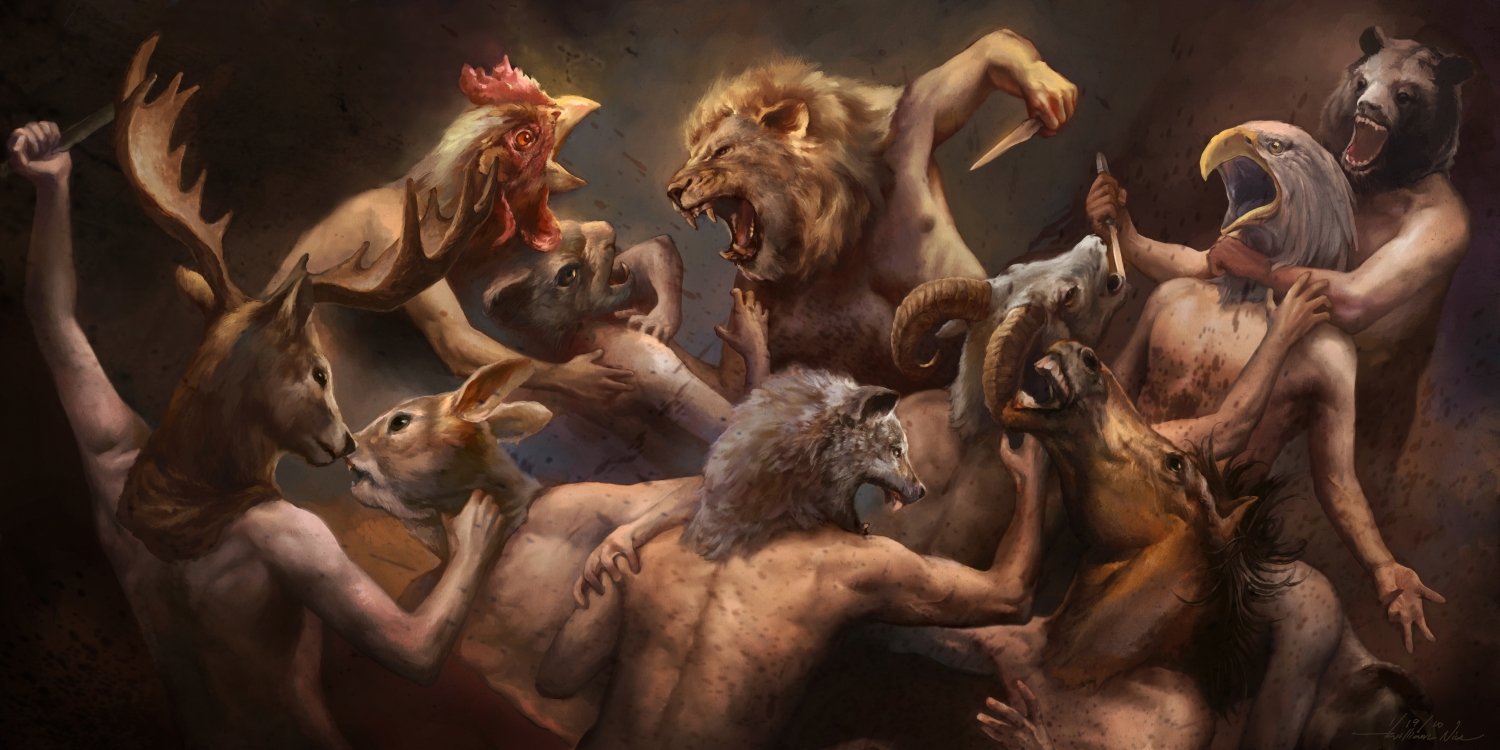
Something’s wrong with his medulla oblongata.
Paradoxically, part of the process of selecting wholeness is recognizing, accepting, and working with our ancient and manifold natures. Six hundred million years ago (!) in Ediacaran seas the plans for what now nests in our skulls were unwittingly laid down.

There are at least two very useful models* for looking at our brains and how their structure contributes to the problem of our clashing natures:
1. Bilaterally – that is, in terms of hemisphericity.
2. Stratigraphically – that is in terms of layers.
Ultimately an investigation of the bilateral clash is the aim, but the hemispheric war -like all wars- has historical antecedents. The neocotex (“new bark”), while ancient by human standards, is a newcomer when measured on a geological calendar. It is a house built on primordial burial grounds.
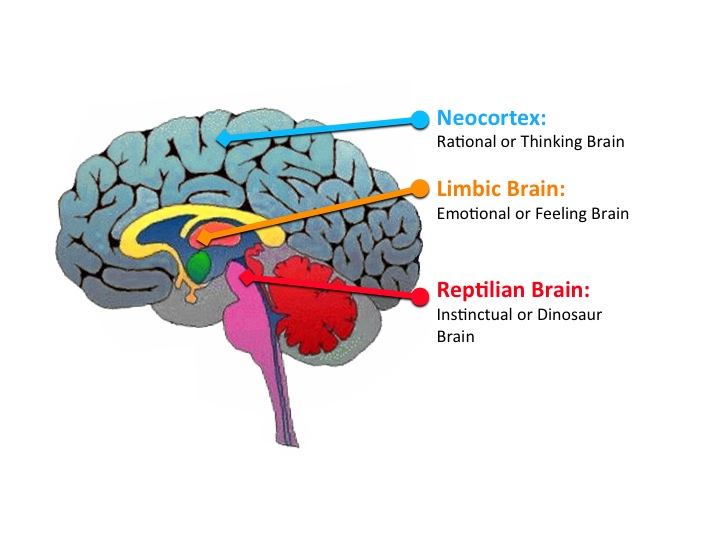
In the 1960’s, the neuroscientist Paul MacLean developed what would become a useful model* for thinking about the evolutionary history of vertebrate neuroanatomy, the “triune brain”. MacLean’s model describes the human brain in terms of three layers or “complexes”, each developing around one another in the course of evolutionary history.
 As with all biological and emergent phenomena, the development of the brain did not happen linearly. Contingency is woven into the fabric of change.
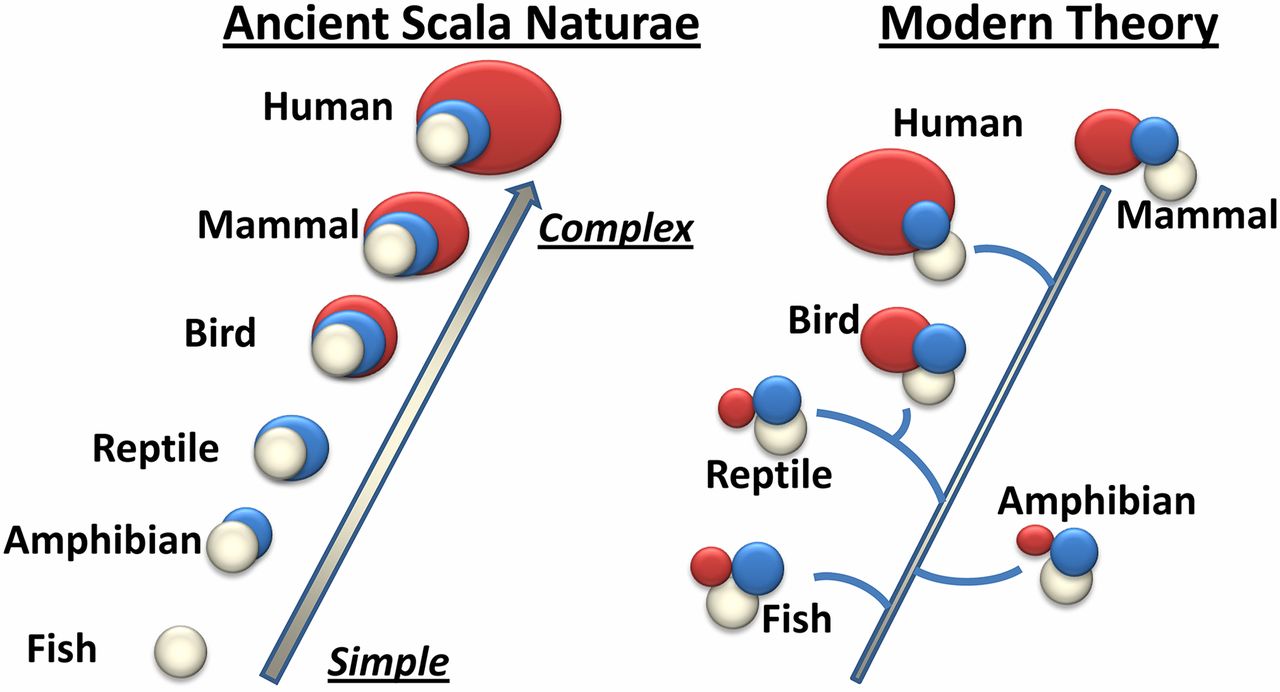
As you sit reading this, buried deep in your skull are animalistic influences stretching back hundreds of millions of years. A confluence of ignorance and hubris have caused us to view “Humanity” as a free-floating ideal, disconnected from our ancient and enormously consequential evolutionary heritage.
Any program of personal and social change must directly address our ancient heritage.
[*The map is not the territory.]


Leave a Reply